
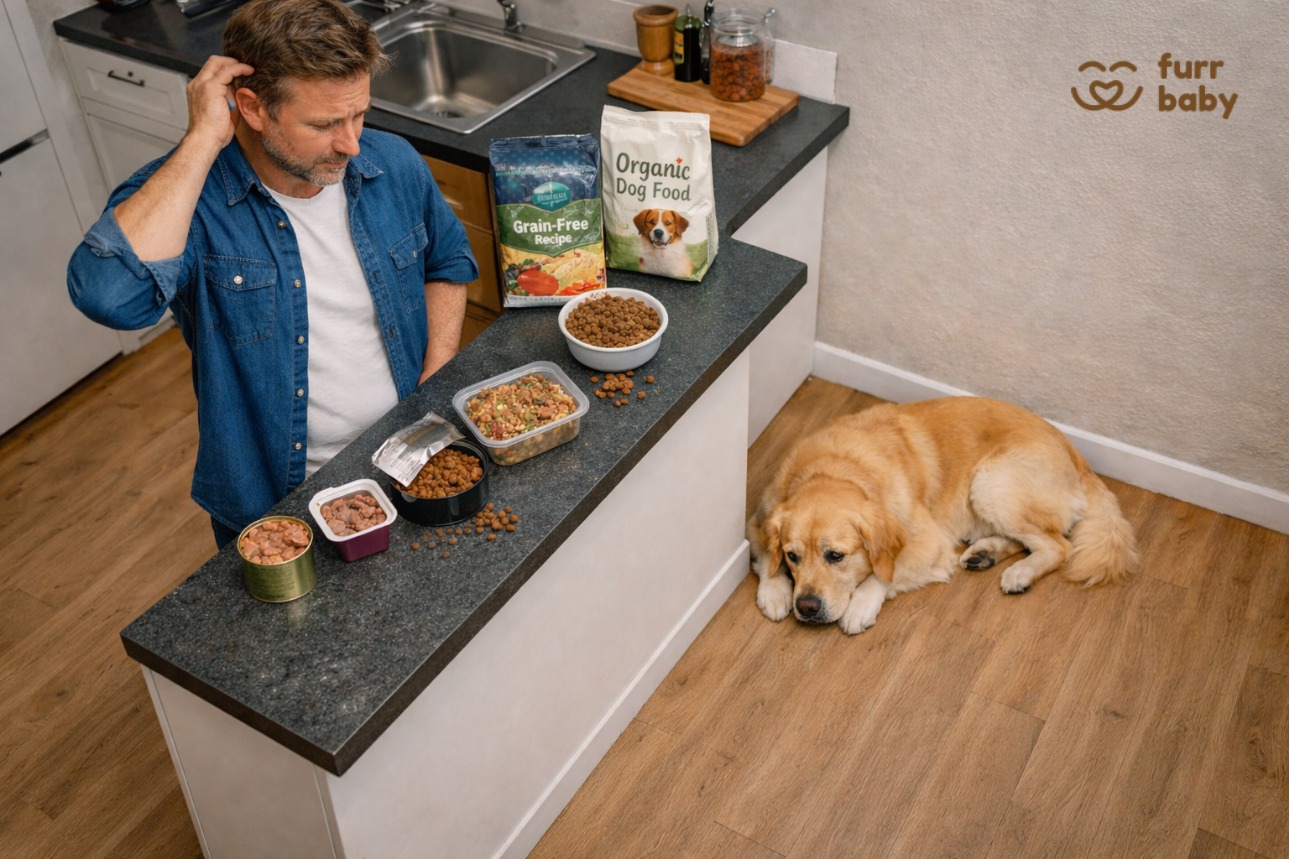
What Foods Should I Give a Dog With Vomiting or Upset Stomach?
Seeing your dog vomit or refuse food can scare any pet parent. One moment your dog is happy and playful, and the next moment you’re thinking:
“My dog has stopped eating his food.”
“My dog is not eating anything… is something seriously wrong?”
Don’t panic. Vomiting and loss of appetite are common issues, and in many cases, they can be managed gently at home with the right food and care. Still, it’s important to understand why it’s happening and what you should safely feed your dog.
At Furrbaby’s dog community, we see this question almost every day. Many loving dog parents worry because their dog not eating food feels like a big warning sign. This guide will help you feel calm, informed, and confident.
Vomiting or an upset stomach doesn’t always mean a serious disease. Often, it’s your dog’s stomach asking for rest and care. Eating spoiled or new food too fast Sudden food changes Stress or anxiety Minor infections Eating grass or garbage Worms or parasites Sometimes, a dog not eating food happens because the stomach feels irritated after vomiting. If vomiting happens more than 24 hours or your dog looks weak, always contact a vet. Before feeding anything, give your dog’s stomach time to settle. What to Do Immediately 1. Stop eating food for 8 to 12 hours 2. Allow only small sips of water 3. Keep your dog warm and calm This step is a basic dog vomiting treatment at home and helps reduce further irritation. Once vomiting slows down, start with soft, bland, easy-to-digest food. These foods are commonly used as home remedies for dog vomiting and upset stomach. These steps are only for mild cases and early support. They help your dog feel better but do not replace veterinary treatment. If vomiting continues, gets worse, or your dog looks weak, always contact a vet. Mild Home Remedies That Help 1. Ice cubes instead of water (prevents gulping) 2. Small meals every 3 to 4 hours 3. Plain curd for gut balance 4. Pumpkin puree to firm stools Never force food. If your dog is not eating food, patience is part of the healing process. When your dog community friend suggests random food, be careful. These mistakes often worsen cases where my dog is not eating anything. Small and slow is the golden rule. If vomiting returns, stop food and reassess. If you’re thinking, “My dog has stopped eating his food even after rest”, observe closely. Warning Signs to Watch Vomiting continues for over 24 hours Blood in vomit or stool Extreme weakness Fever Continuous drooling In such cases, dog vomiting treatment at home is not enough. Vet care is needed. If you’re unsure whether your dog’s symptoms are normal, our Furrbaby community helps you sanity-check decisions with experienced dog parents - so you don’t guess alone at 2 a.m. Dogs feel stress just like humans. When sick, they need comfort. How You Can Help Emotionally Sit near your dog Speak softly Avoid loud noise Let them rest Many dogs stop eating simply because they feel unsafe or anxious. This is often discussed inside our dog community, where parents share similar experiences. Only after 24 to 48 hours with no vomiting. Transition Slowly Mix bland food with regular food Increase normal food gradually over 3 days Watch stool and appetite Sudden return to regular food is a common reason a dog not eating food again. At Furrbaby, we see many worried messages like: “My dog is not eating anything, please help.” “My dog vomited once. Should I panic?” Most of the time, dogs recover well with gentle care and the right food. The key is not guessing alone. You can join the community and ask your dog-related questions anytime. You’re never alone here. Call your vet if: 1. Puppy is under 6 months 2. Vomiting is severe or continuous 3. Dog has an existing illness 4. Your dog looks dehydrated Home care is helpful, but vet care saves lives. Watching your dog vomit or refuse food is emotionally draining. When your dog not eating food, it feels like your heart skips a beat. The good news is that most mild stomach issues improve with rest, a simple diet, and gentle care. Always listen to your dog’s body. Start slow, feed gently, and never hesitate to seek help. And remember - thousands of pet parents face the same worry every day. Join community at Furrbaby to ask questions, share concerns, and get support from people who truly understand your dog. Your dog trusts you. And you’re already doing the right thing by learning.Why Is My Dog Vomiting or Not Eating Food?
Common Reasons Dogs Get Upset Stomachs
.jpeg)
First Rule: Give the Stomach a Break
Best Foods for Dogs With Vomiting or Upset Stomach
Vet-Approved Safe Foods Table
Simple Home Remedies for Dog Vomiting (Safe & Gentle)
Foods You Should NEVER Give During Vomiting

Avoid These Completely
How Much and How Often Should I Feed?
Feeding Schedule During Recovery
What If My Dog Still Refuses Food?
Emotional Support Matters Too
When Can I Go Back to Normal Dog Food?
Real Talk From the Dog Community
When Should You Call a Vet Immediately?
Final Thoughts