

Why Is My Cat Suddenly Lethargic? Causes and Warning Signs
If your cat, who usually runs to the food bowl or curls up near you, suddenly seems tired, quiet, or uninterested in everything, it can feel scary. Many pet parents tell us at Furrbaby the same thing:
“My cat is just lying there… something feels off.”
And you’re right to trust that feeling. Cats are masters at hiding discomfort. So whilst lethargy indicates up, it’s regularly their quiet manner of asking for help. Let’s understand this together - evenly, step by step - so you understand what is probably going on and what to do next. Lethargy is more than just being sleepy. A lethargic cat may: 1. Move less than usual 2. Sleep much more 3. Stop playing or grooming 4. Avoid interaction 5. Seem emotionally “distant” Think of it like this: your cat’s energy is their voice. When that energy drops suddenly, it’s a message worth listening to. Let’s gently break down the most common reasons - starting from simple causes to more serious ones. Just like humans, cats can feel drained when fighting infections. These may include: 1. Viral infections (like upper respiratory infections, FIV, or FeLV) 2. Bacterial infections (such as abscesses from bites) 3. Parasites (internal or external) Their body uses extra energy to heal, leaving them tired and weak. Some chronic illnesses like FIV or FeLV can also affect energy levels, but these usually cause slow, long-term changes, not sudden lethargy. Pain doesn’t always look dramatic in cats. It can come from: 1. Dental problems 2. Arthritis 3. Injuries or falls 4. Internal pain you can’t see Instead of crying out, cats often slow down and withdraw. Conditions affecting the kidneys, liver, or heart can slowly steal your cat’s energy. These issues interfere with how the body cleans blood, manages fluids, or pumps oxygen - leading to deep fatigue. Cats are curious. Sometimes too curious. Common toxins include: 1. Certain houseplants 2. Cleaning chemicals 3. Human foods or medicines Even small amounts can cause sudden lethargy and require urgent care. Problems like: 1. Diabetes (unstable blood sugar) 2. Anemia (low red blood cells) These reduce oxygen or energy supply in the body, making your cat feel exhausted. Yes - cats feel stress deeply. Changes like: 1. Moving homes 2. New pets or people 3. Loud environments Can temporarily shut them down emotionally and physically. Mild lethargy for 24 to 48 hours after vaccinations or procedures can be normal. But if it lasts longer or worsens, it needs attention. Lethargy alone is concerning - but combined with these signs, it becomes urgent: Vomiting or diarrhea No appetite Constipation Straining to urinate Frequent trips with little output Dark or bloody urine Rapid or labored breathing Coughing or wheezing Hiding more than usual Sudden aggression Crying or unusual vocal sounds Confusion or disorientation Pale gums Weight loss Fever Signs of dehydration (dry mouth, sunken eyes) If you notice even one or two of these, it’s time to act. This section helps you decide what to do right now. What you may notice: Your cat is a little less active than usual Still eating, drinking, and responding to you What to do: Stay calm and keep a gentle watch for the next 24 hours. Make sure your cat has a warm, quiet place to rest, fresh water nearby, and their usual food. Sometimes cats just need a short break to recover. If your cat starts acting normal again, that’s a good sign. But if the tiredness continues or worsens, it’s time to move to the next step. What you may notice: Sleeping most of the day Eating much less than usual Hiding or avoiding attention What to do: This is your sign not to wait too long. Call your vet and book an appointment within 24 hours. Until then, keep your cat comfortable and observe closely. Avoid forcing food or movement. Your calm care and early action can prevent a small issue from becoming a serious one. What you may notice: Difficulty breathing Collapse or extreme weakness Pale gums Refusing food and water What to do: This is an emergency. Your cat needs help right away. Take them to the nearest veterinary clinic or emergency hospital immediately. Don’t wait to “see if it gets better.” In these moments, acting fast can save your cat’s life. Trust your instincts - your quick decision matters more than you think. Remember: Your cat can’t tell you what’s wrong, but their behavior is their language. When you respond with care and attention, you’re giving them exactly what they need most - your protection and love. Here’s the most important thing to remember: Lethargy is a symptom, not a diagnosis. Because cats hide illness so well, waiting too long can make small problems turn serious. A vet visit helps uncover the root cause early - when treatment is easier and recovery is faster. Until then: Keep your cat warm and comfortable Ensure fresh water is nearby Avoid giving human medicines Observe and note any changes Trust your instincts. If something feels wrong, it probably is. The real solution comes from treating the root cause, which may include: Medication for infection Pain management Fluid therapy Dietary changes Stress reduction The earlier the cause is found, the easier the treatment usually is. If your cat’s behavior still doesn’t feel right, don’t wait and wonder. A quick call or visit to your veterinarian can give you peace of mind and help catch problems early - before they become serious. Your vet is your best partner in understanding what your cat’s body is trying to say. To stay informed and confident as a pet parent, explore more helpful guides on Furrbaby, such as: Signs Your Cat Is in Pain (And How to Tell Early) When Is Cat Behavior an Emergency? How Stress Affects Cats and What You Can Do You should contact a vet if: Lethargy lasts more than 24 hours Your cat stops eating or drinking There is vomiting, diarrhea, or breathing trouble Your instincts say something is wrong Seek immediate emergency care if: Your cat collapses Has difficulty breathing Has pale gums Cannot move or respond Waiting too long is the biggest risk. Learning more today can help you make calmer, faster decisions tomorrow - because your cat’s health deserves your attention at every step. Your cat depends on you - not just for food, but for understanding. Sudden lethargy isn’t your cat being “lazy” or “moody.” It’s their quiet signal for care. At Furrbaby, we believe every pet deserves to be heard, even when they can’t speak. By noticing small changes and acting with love, you become your cat’s strongest protector. If you’re ever unsure, trust your instincts - and reach out to your vet. Love is noticing when something feels off and choosing to act. 1. Is it normal for cats to be lethargic sometimes? Yes, short periods of low energy can happen. But sudden or prolonged lethargy is not normal and should be checked. 2. How long is too long for lethargy after vaccination? Mild tiredness for 1 to 2 days is common. If it lasts more than 48 hours or worsens, contact your vet. 3. Can stress alone make my cat lethargic? Yes, emotional stress can cause temporary lethargy. However, it should improve once the stressor is removed. 4. Should I wait and watch or go to the vet immediately? If lethargy appears suddenly or comes with other symptoms, don’t wait - see a vet promptly. 5. Can dehydration cause lethargy in cats? Absolutely. Dehydration reduces circulation and energy levels, making cats weak and inactive.What Does Lethargy in Cats Really Mean?
Common Causes of Sudden Lethargy in Cats
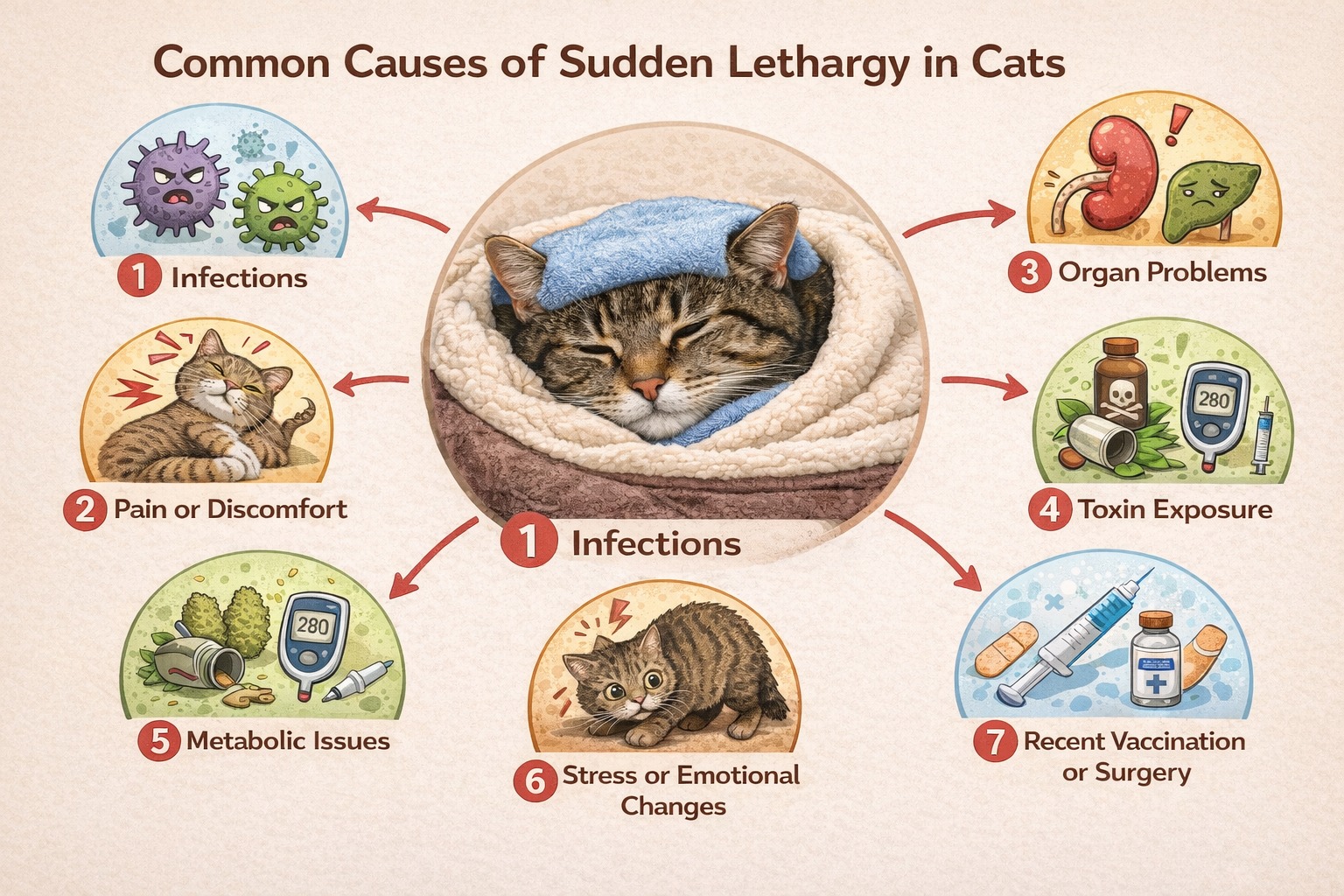
1. Infections
2. Pain or Discomfort
3. Organ Problems
4. Toxin Exposure
5. Metabolic Issues
6. Stress or Emotional Changes
7. Recent Vaccination or Surgery
Warning Signs You Should Never Ignore
Digestive Changes
Litter Box Problems
Breathing Issues
Behavior Changes
Physical Clues
How Serious Is It? When Should You Worry?
Mild Lethargy
Moderate Lethargy
Severe or Emergency Signs
What Should You Do Right Now?
When Should You Connect with a Vet?
Final Thoughts from Furrbaby
FAQs